Mugo wa Kîbirû: The Life, Prophecies and Legacy of the Legendary Agĩkũyũ Seer

For generations, stories about this legendary seer have travelled through families and communities in central Kenya. His name often appears in discussions about traditional African spirituality, the arrival of European colonialists, the construction of the railway and the struggle for independence.
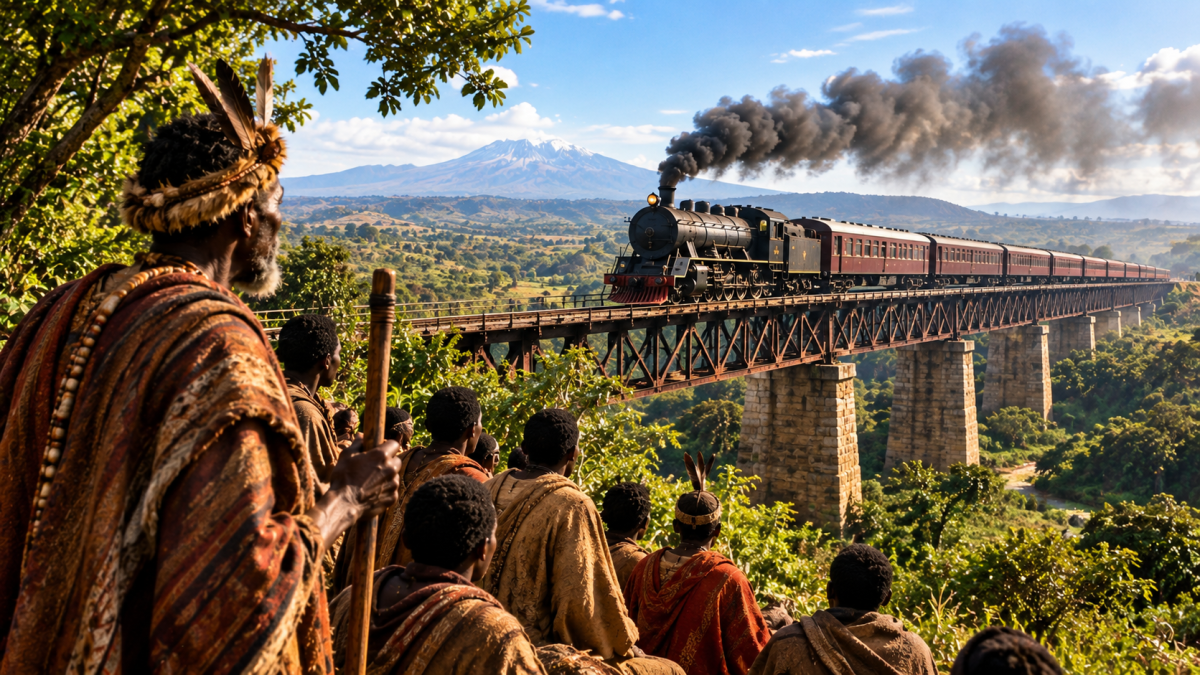
According to Agĩkũyũ oral traditions, Mugo wa Kîbirû possessed extraordinary spiritual insight. People remember him for predictions that appeared to describe major changes in the lives of his people. Among the most famous stories is the prophecy of an iron snake, which many people associate with the railway that connected the Kenyan interior to the coast.
The Mysterious Childhood of Mugo wa Kîbirû: The Boy Who Said He Came from Ngai.
However, his story goes beyond predictions. It also raises important questions about how communities preserve their history, understand change and pass knowledge from one generation to another.
This article explores the life, prophecies and cultural legacy of Mugo wa Kîbirû. It also separates established historical context from oral accounts whose details remain difficult to verify.
Who Was Mugo wa Kîbirû?
Mugo wa Kîbirû is remembered in Agĩkũyũ oral tradition as a traditional healer, diviner and seer. He is also associated with the name Cege wa Kibiru in historical writing.
The title Mugo is connected with traditional healing and spiritual practice among the Agĩkũyũ. In community memory, Mugo wa Kîbirû became much more than a healer. He became a figure associated with foresight, ancestral knowledge and the ability to interpret events that ordinary people could not easily understand.
Stories about him are particularly associated with the Kariara area of present-day Murang’a County and the wider central Kenyan region. His reputation has endured because many people connect his reported predictions with developments that later transformed Kenya.
Nevertheless, researchers and readers should approach his biography carefully. Much of the information about his early life comes through oral tradition rather than a complete set of contemporary written records.
Consequently, some details about his birth, upbringing, activities and death remain uncertain.
The Mysterious Early Life of Mugo wa Kîbirû
One of the best-known accounts of Mugo wa Kîbirû describes an unusual beginning to his life.
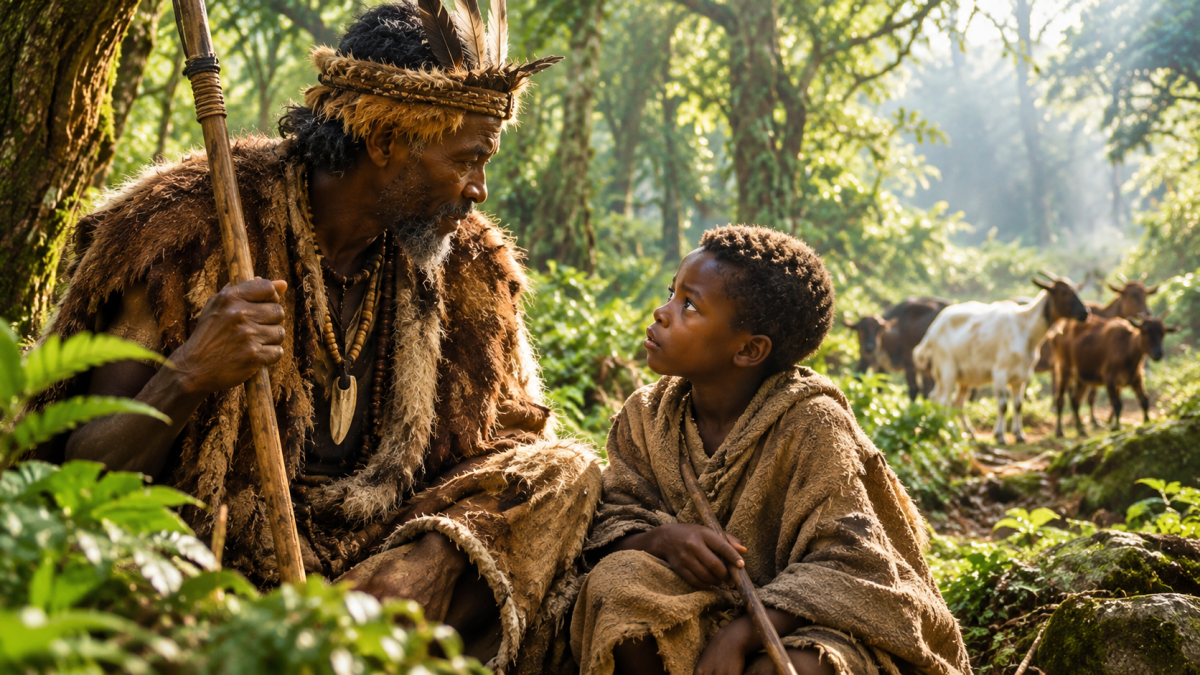
According to a popular oral narrative, a hunter named Kibiru discovered a young boy alone in the forest and took him in. The boy reportedly explained that he had been with Ngai, the Supreme Being in Agĩkũyũ belief.
The story presents the child as someone whose origins and knowledge differed from those of ordinary people. As he grew older, his unusual insights allegedly earned him a reputation as a seer.
This account forms an important part of the legend. It helps explain why many people associate Mugo wa Kîbirû with spiritual authority and extraordinary knowledge.
However, the story should be understood as an oral account, not a verified record of his childhood. Without independent contemporary evidence, it is difficult to establish exactly what happened or how the narrative developed over time.
Even so, the story reveals how the community has remembered him: as a figure whose wisdom appeared to extend beyond everyday human experience.
Mugo wa Kîbirû and the Prophecy of the Iron Snake
Perhaps the most famous story associated with Mugo wa Kîbirû concerns an iron snake.
According to oral tradition, the seer described a strange iron creature that would move across the land. Many later accounts interpret this description as a prediction of the railway that British colonial authorities constructed in East Africa.
The railway became one of the most significant infrastructure projects in Kenya’s colonial history. Construction of the Uganda Railway began at the coast in 1896, and the line reached Kisumu, then known as Port Florence, in 1901.
Its arrival transformed transportation, trade, settlement and colonial administration. It also helped the British government extend its political and economic influence into the interior.
For people who connect the iron-snake story with the railway, the resemblance is compelling. A long metal structure carrying powerful moving machines across the landscape offers a striking image of the railway as it would have appeared to people unfamiliar with modern rail transport.
Nevertheless, an important distinction remains. The railway’s historical development is documented, but the exact wording, timing and original context of the alleged prophecy are not established with the same certainty.
Therefore, it is more accurate to say that oral tradition associates Mugo wa Kîbirû with a prophecy interpreted as referring to the railway than to claim that historians have conclusively proved he predicted it.
Did Mugo wa Kîbirû Predict the Arrival of European Colonialists?
Another major part of his legacy concerns the arrival of Europeans in Agĩkũyũ territory.
According to popular accounts, Mugo wa Kîbirû described unfamiliar people who would come from overseas. Some versions of the story associate these predictions with their appearance, clothing, weapons and disruptive influence on traditional life.
The historical context is significant. British influence expanded in East Africa during the late nineteenth century. The establishment of colonial administration brought new systems of government, land control, taxation, labour and economic organisation.
These changes affected Agĩkũyũ communities and other populations throughout the region. They also generated resistance, negotiation and profound social transformation.
Stories about Mugo wa Kîbirû interpret these developments through the language of prophecy. They present the seer as someone who warned his people about a future that would challenge established customs and ways of life.
However, the precise words attributed to him vary between accounts. Without a clearly established contemporary record, readers should avoid treating every version as a verbatim statement made before colonial rule.
The enduring significance of the story lies partly in how the community remembers and interprets the colonial experience.
The Prophecy of the Mugumo Tree in Thika
A further story connects Mugo wa Kîbirû with a mugumo tree, a type of fig tree that holds cultural and spiritual significance in Agĩkũyũ tradition.
Popular narratives associate a tree in the Thika area with a prediction about the departure of colonial rule. Some versions suggest that the tree would fall or die when the colonial period came to an end.
The story later became linked to Kenya’s independence in 1963. For people who recount it, the tree represents a connection between traditional spiritual knowledge and the country’s political future.
The mugumo tree also carries wider cultural meaning. In Agĩkũyũ traditions, particular trees and natural places can hold spiritual, communal and historical significance. Their meaning cannot always be reduced to their physical appearance or biological characteristics.
Still, the reported prophecy and the tree’s supposed connection to independence require careful historical investigation. The exact identity of the tree, the original form of the prediction and the evidence connecting the two are not equally well documented.
The story remains an important part of the popular memory surrounding Mugo wa Kîbirû, but its historical details should not be presented as conclusively verified.
Mugo wa Kîbirû and Traditional Agĩkũyũ Spirituality
To understand Mugo wa Kîbirû’s place in history, it helps to understand the cultural world in which his story developed.
Traditional Agĩkũyũ spirituality recognised Ngai as the Supreme Being. Spiritual beliefs, ancestral memory, community customs and relationships with the natural world shaped how people understood life and their place in the world.
Traditional healers and diviners could serve important roles within their communities. Depending on the individual and the circumstances, people might seek their help with illness, uncertainty, spiritual concerns or the interpretation of troubling events.
Mugo wa Kîbirû’s reputation fits within this broader context. His remembered role as a seer reflects the importance attached to spiritual insight and traditional knowledge.
It is also important to avoid assuming that every Agĩkũyũ person held identical beliefs or interpreted the seer’s reputation in the same way. Cultural practices and interpretations can differ between families, generations and communities.
Today, interest in Mugo wa Kîbirû can provide an opportunity to explore Agĩkũyũ history on its own terms. It can also encourage younger generations to learn about traditional knowledge without losing sight of the need for careful research.
When Did Mugo wa Kîbirû Live?
The chronology of Mugo wa Kîbirû’s life is one of the most important questions surrounding his story.
Popular accounts do not always agree about when he was born or how long he lived. Some community narratives place him much earlier than the period of British colonial expansion. Other historical discussions associate Cege wa Kibiru with the nineteenth century and the early colonial era.
Historian John Lonsdale discusses Cege wa Kibiru in his research on the political uses of Kikuyu history and the memory of Waiyaki wa Hinga. This scholarship highlights how stories about historical figures can acquire political and cultural meaning as communities reflect on colonial rule, land and resistance.
These differences matter because dates affect how researchers assess the alleged prophecies. A claim that someone predicted a railway, for example, requires evidence that the prediction existed before the railway’s construction or before knowledge of the project could have influenced the story.
At present, it is safest to acknowledge that the chronology remains disputed rather than assign Mugo wa Kîbirû a definitive birth or death date without sufficient evidence.
Further research into early written accounts, oral histories and the work of historians could help clarify the timeline.
Mugo wa Kîbirû, Waiyaki wa Hinga and the Memory of Colonial Resistance
Mugo wa Kîbirû’s legacy also connects with wider discussions about Agĩkũyũ history and resistance to colonial authority.
Waiyaki wa Hinga is remembered as an important Agĩkũyũ leader who opposed the growing influence of British colonial forces in the late nineteenth century. His life and resistance have become part of the historical memory of colonial encounters in central Kenya.
Historians have examined how memories of figures such as Waiyaki and Mugo helped communities interpret political power, dispossession and colonial rule.
These memories do more than preserve stories about individuals. They also provide a way for later generations to discuss the loss of land, changes in authority and the struggle to maintain cultural identity.
The connection between Mugo wa Kîbirû and Waiyaki wa Hinga should not, however, be taken to mean that every story about them is independently verified. Their historical circumstances, the surviving evidence and the ways people remember them need to be examined separately.
By studying both oral tradition and written historical research, readers can gain a richer understanding of how Agĩkũyũ communities have remembered the colonial period.
Were Mugo wa Kîbirû’s Prophecies Real?
This question continues to attract interest because some stories associated with Mugo wa Kîbirû appear to correspond with major historical developments.
The railway existed. British colonial rule transformed central Kenya. The country eventually gained independence. These events are supported by historical evidence.
However, confirming that an event occurred is different from proving that someone predicted it beforehand.
To establish a prophecy as a documented prediction, researchers would need reliable evidence of what was said, when it was said and how the account was preserved. Contemporary records, independently collected oral testimony and consistent early versions of a story could help strengthen such a claim.
Without that evidence, several possibilities remain. A prediction may preserve an older statement, a later retelling may have adapted an earlier story to fit known events, or a combination of memory, interpretation and historical experience may have shaped the account.
These possibilities do not make oral tradition worthless. Oral histories can preserve valuable knowledge about communities, beliefs, identities and experiences that written records overlook.
Instead, they remind us to examine the source, context and transmission of each account.
The most responsible approach is therefore to respect Mugo wa Kîbirû’s cultural importance while distinguishing between documented history, community memory and claims that remain unverified.
Why Mugo wa Kîbirû Still Matters Today
Mugo wa Kîbirû remains relevant because his story brings together history, spirituality, cultural identity and the interpretation of social change.
First, his legacy preserves an important part of Agĩkũyũ oral tradition. These accounts provide insight into how communities have understood their past and passed knowledge between generations.
Second, the stories encourage discussion about colonial history. The railway, European expansion and independence were not merely political events; they changed everyday life, land relationships and the organisation of communities.
Third, his story raises questions about historical evidence. It offers an opportunity to explore how historians compare oral accounts with written documents and how stories change as people retell them.
Finally, Mugo wa Kîbirû’s continuing popularity demonstrates the value many people place on indigenous knowledge. His name invites younger generations to investigate their heritage, listen to elders and ask thoughtful questions about the past.
Preserving that heritage requires both respect and careful research. Neither blind acceptance nor automatic dismissal helps us understand it fully.
Conclusion
Mugo wa Kîbirû occupies a distinctive place in Agĩkũyũ historical memory. Remembered as a healer and seer, he is associated with stories about the iron snake, European colonialism and the mugumo tree linked to Kenya’s independence.
These accounts have endured because they connect traditional knowledge with events that reshaped the region. At the same time, important questions remain about the chronology of his life, the original wording of the prophecies and the evidence supporting individual claims.
Understanding his legacy therefore requires two complementary approaches: respect for oral tradition and a commitment to historical investigation.
For Gatanga, Murang’a and the wider central Kenyan region, Mugo wa Kîbirû’s story offers a valuable starting point for exploring the history and cultural knowledge of the Agĩkũyũ people.
His legacy deserves to be preserved, researched and discussed so that future generations can appreciate both the power of the stories and the importance of understanding the evidence behind them.
Frequently Asked Questions About Mugo wa Kîbirû
Who was Mugo wa Kîbirû?
Mugo wa Kîbirû, also associated with the name Cege wa Kibiru, is remembered in Agĩkũyũ oral tradition as a traditional healer, diviner and seer known for predictions linked to major historical changes.
What is Mugo wa Kîbirû famous for?
He is best known for oral traditions about an iron snake interpreted as the Uganda Railway, predictions concerning the arrival of Europeans, and a mugumo tree story associated with the end of colonial rule.
Did Mugo wa Kîbirû predict the Uganda Railway?
Oral traditions attribute an iron-snake prediction to him, and many people interpret it as referring to the railway. However, the exact wording and date of the alleged prediction have not been conclusively established.
Where did Mugo wa Kîbirû live?
His story is associated with Kariara in present-day Murang’a County and the wider central Kenyan region. The precise details of his life and movements remain uncertain.
When was Mugo wa Kîbirû born?
There is no universally established birth date. Different accounts place him in different periods, so a precise date should not be treated as settled historical fact.
Why is Mugo wa Kîbirû important to Agĩkũyũ history?
His legacy preserves stories about traditional spirituality, indigenous knowledge and the community’s interpretation of colonial-era change. His story also illustrates the importance of oral tradition in historical memory.
Sources and Further Reading
For readers who want to investigate Mugo wa Kîbirû’s story further, these sources provide useful starting points:
- National Museums of Kenya — Shujaa Stories: A cultural account of Mugo wa Kîbirû and the traditions associated with him. Read the account on Google Arts & Culture.
- John Lonsdale — “The Prayers of Waiyaki: Political Uses of the Kikuyu Past” (1995): A scholarly study of political memory, colonial history and the ways figures such as Waiyaki and Mugo have been remembered. View the bibliographic record.
- Paukwa — “Mugo: The Seer”: A popular retelling of the traditional stories associated with Mugo wa Kîbirû. Read the story.
These sources differ in purpose and approach. Readers should compare their accounts and consider which details represent documented history, oral tradition or later interpretation.
What's your reaction?