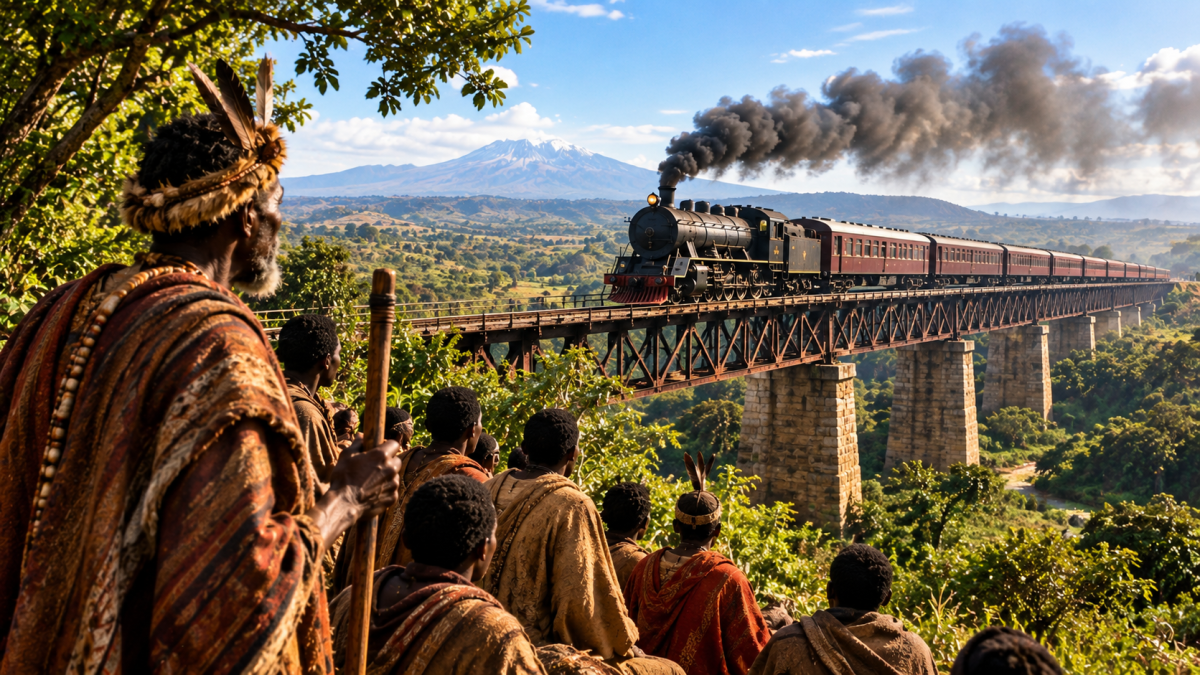
The Mysterious Childhood of Mugo wa Kîbirû: The Boy Who Said He Came from Ngai

The story of Mugo wa Kîbirû begins with a mystery.
Long before people linked him to famous prophecies, stories about his early life had already captured the imagination of the Agĩkũyũ community. According to oral tradition, his childhood was unlike that of an ordinary child.
One popular account tells of a boy found alone in the forest. A hunter named Kibiru reportedly took the child in. Later, the boy made a surprising claim about his origins.
He said he had been with Ngai, the Supreme Being in Agĩkũyũ belief.
Mugo wa Kîbirû: The Life, Prophecies and Legacy of the Legendary Agĩkũyũ Seer.
This story helped shape the reputation of Mugo wa Kîbirû as a spiritual figure. However, how much can we establish about his childhood? And what does this account tell us about Agĩkũyũ culture?
Let us explore the story, its meaning and the questions that remain unanswered.
Who Was Mugo wa Kîbirû?
Mugo wa Kîbirû is remembered as a traditional healer, diviner and seer in Agĩkũyũ oral history. He is also known as Cege wa Kibiru in some historical accounts.
Many people associate his name with predictions about the arrival of Europeans, the construction of the railway and changes in traditional life.
However, his childhood story offers another way to understand his legacy. It explains how people came to regard him as a person with unusual spiritual insight.
Much of the information about his early life comes from oral tradition. These accounts have passed from one generation to another. Yet they do not provide the same level of detail as a modern birth record or contemporary biography.
Therefore, we must distinguish between the traditional story and facts that historians can independently verify.
The Story of the Boy Found in the Forest
According to a popular account, a hunter named Kibiru discovered a young boy alone in the forest.
The hunter reportedly took the child in and raised him. The story does not offer a fully documented account of the boy’s family or the circumstances that led to his discovery.
Instead, it focuses on a remarkable statement attributed to the child.
When asked about his origins, the boy reportedly said that he had been with Ngai. This answer gave the story a spiritual meaning and helped explain why people later regarded him as an extraordinary person.
The account became part of the traditional narrative surrounding Mugo wa Kîbirû.
However, there is no widely established contemporary record that confirms every detail of this childhood story. Its importance lies mainly in the way the community has preserved and interpreted it.
What Does Ngai Mean in Agĩkũyũ Tradition?
To understand the story, we must first understand the role of Ngai in traditional Agĩkũyũ belief.
Ngai is recognised as the Supreme Being. Traditional accounts also connect Ngai with Mount Kenya, known as Kĩrĩnyaga in the Gĩkũyũ language.
Spiritual beliefs played an important role in traditional Agĩkũyũ life. They influenced how people understood nature, community responsibilities and the events around them.
In this cultural setting, a claim of having been with Ngai carried deep spiritual meaning. It suggested a connection beyond ordinary human experience.
That is why the statement attributed to young Mugo wa Kîbirû matters in the traditional story. It helps explain his later reputation as a seer.
Still, we should not assume that every community member interpreted the account in exactly the same way. Beliefs and oral narratives can differ between families and generations.
How Did Mugo wa Kîbirû Become a Famous Seer?
The childhood story forms only one part of Mugo wa Kîbirû’s legacy.
As an adult, he became associated with traditional healing and spiritual insight. Oral accounts also credit him with predictions about events that later transformed central Kenya.
One famous story concerns an iron snake. Many people interpret this image as a reference to the railway built during British colonial rule.
Other accounts link him to predictions about the arrival of Europeans and the changes they would bring.
These stories helped establish his place in Agĩkũyũ historical memory. They also connected his reported spiritual insight with major events in the community’s past.
Nevertheless, the details require careful examination. The railway and colonial period are documented historical events. The exact wording and timing of the predictions attributed to Mugo wa Kîbirû are less certain.
His childhood story should therefore be understood as part of a wider oral tradition rather than as independently verified proof of supernatural ability.
Why Has His Childhood Story Survived for So Long?
Stories survive when communities continue to find meaning in them.
The childhood account of Mugo wa Kîbirû presents him as a person whose life began under unusual circumstances. It also provides a possible explanation for his later spiritual reputation.
Moreover, the story reflects the importance of oral tradition in preserving cultural knowledge. Before written records became widespread, communities passed history, values and important memories through spoken accounts.
Elders played an important role in this process. They shared stories with younger generations, who could then preserve and retell them.
As a result, oral accounts became part of a community’s understanding of its past.
However, oral traditions can change over time. Different storytellers may remember details differently or emphasise particular parts of a story. Later events can also influence how people interpret earlier accounts.
This does not make oral tradition unimportant. Instead, it shows why researchers should compare different versions and consider the historical context.
What Do Historians Say About His Early Life?
One challenge in studying Mugo wa Kîbirû is establishing a reliable timeline.
Historical writing discusses him under the name Cege wa Kibiru. Historian John Lonsdale examines his place in the political memory of the Agĩkũyũ, alongside figures such as Waiyaki wa Hinga.
This research helps explain how stories about Mugo wa Kîbirû became connected to questions of colonial rule, land and cultural identity.
However, historical discussion does not confirm every detail of his childhood. The story about the hunter, the forest and the child’s statement about Ngai remains an oral account that requires further investigation.
Researchers would need more evidence to establish when the story first appeared and how it developed.
For example, early written records and independently collected accounts from elders could help clarify its history.
Until then, it is best to acknowledge both the story’s cultural importance and the limits of the available evidence.
The Importance of Preserving Agĩkũyũ Oral History
The story of Mugo wa Kîbirû offers an important lesson about preserving indigenous knowledge.
First, oral history helps communities retain memories that may not appear in official records. It can preserve local names, cultural practices and accounts of important people.
Second, these stories encourage younger generations to learn about their heritage. They can also create opportunities for elders to share knowledge and explain its meaning.
Furthermore, oral traditions can guide historical research. Researchers can use them to identify places, people and events that deserve closer investigation.
However, preservation should include careful documentation. Recording different versions of a story can help future generations understand how it has changed over time.
Communities can also preserve stories in their original languages. This matters because translation may lose some of the meaning found in traditional expressions.
In the case of Mugo wa Kîbirû, preserving the childhood account alongside historical research would help keep the story alive while making its origins easier to study.
What Can We Learn from the Mystery of His Childhood?
The childhood of Mugo wa Kîbirû remains a subject of interest because it connects personal mystery with cultural history.
The story presents him as a child with an unusual origin. It also explains, within oral tradition, why people later associated him with spiritual insight.
At the same time, the account reminds us to ask important questions. Who first told the story? When did it enter written records? And how did later events influence the way people remembered it?
These questions do not diminish the story’s cultural value. Instead, they offer a way to understand it more deeply.
By combining respect for oral tradition with careful historical research, we can preserve the story without confusing belief with proven fact.
Conclusion
The mysterious childhood of Mugo wa Kîbirû remains an important part of his legacy.
According to oral tradition, a hunter named Kibiru found a boy alone in the forest. The child reportedly said he had been with Ngai, a statement that helped shape his later reputation as a seer.
Although the story has survived across generations, its individual details remain difficult to verify independently.
Even so, the account provides valuable insight into Agĩkũyũ oral history and the way communities preserve stories about remarkable figures.
The best way to honour this heritage is to continue sharing it, documenting different versions and investigating its historical background.
Mugo wa Kîbirû’s childhood may remain a mystery. Yet the story itself continues to open a window into the beliefs, memories and cultural identity of the Agĩkũyũ people.
Frequently Asked Questions
Who raised Mugo wa Kîbirû?
According to a popular oral account, a hunter named Kibiru found the boy in the forest and took him in. However, this detail has not been independently confirmed by contemporary records.
What did Mugo wa Kîbirû say about his childhood?
The traditional story says that he claimed to have been with Ngai, the Supreme Being in Agĩkũyũ belief.
Was Mugo wa Kîbirû a real person?
Historical writing discusses Cege wa Kibiru, also associated with Mugo wa Kîbirû. However, many details about his early life come from oral tradition and remain uncertain.
Why is Mugo wa Kîbirû famous?
He is remembered as a traditional healer and seer. Oral traditions associate him with predictions about the railway, European colonialism and changes in Agĩkũyũ life.
Why is his childhood story important?
The story helps explain his spiritual reputation and provides insight into how Agĩkũyũ communities preserve cultural knowledge through oral history.
Sources and Further Reading
- National Museums of Kenya — Shujaa Stories: Read the cultural account of Mugo wa Kîbirû.
- John Lonsdale — “The Prayers of Waiyaki: Political Uses of the Kikuyu Past” (1995): View the scholarly reference.
- Paukwa — “Mugo: The Seer”: Read the traditional narrative.
What's your reaction?