Azolla farming is gaining popularity among Kenyan farmers as a low-cost, high-protein livestock feed that grows quickly and requires minimal space. This floating aquatic fern thrives in shallow water and doubles its biomass in just a few days under the right conditions. As a result, it offers an affordable way to supplement livestock diets and reduce feed costs.
Find Jobs or Hire Talent on Murang’a County’s No.1 Jobs Website.
In Kenya, where feed prices continue to rise, Azolla provides a sustainable alternative for dairy farmers, poultry keepers, fish farmers, and small-scale livestock producers. This guide explains everything you need to know—from setup and maintenance to feeding rates and profitability.
What Is Azolla?
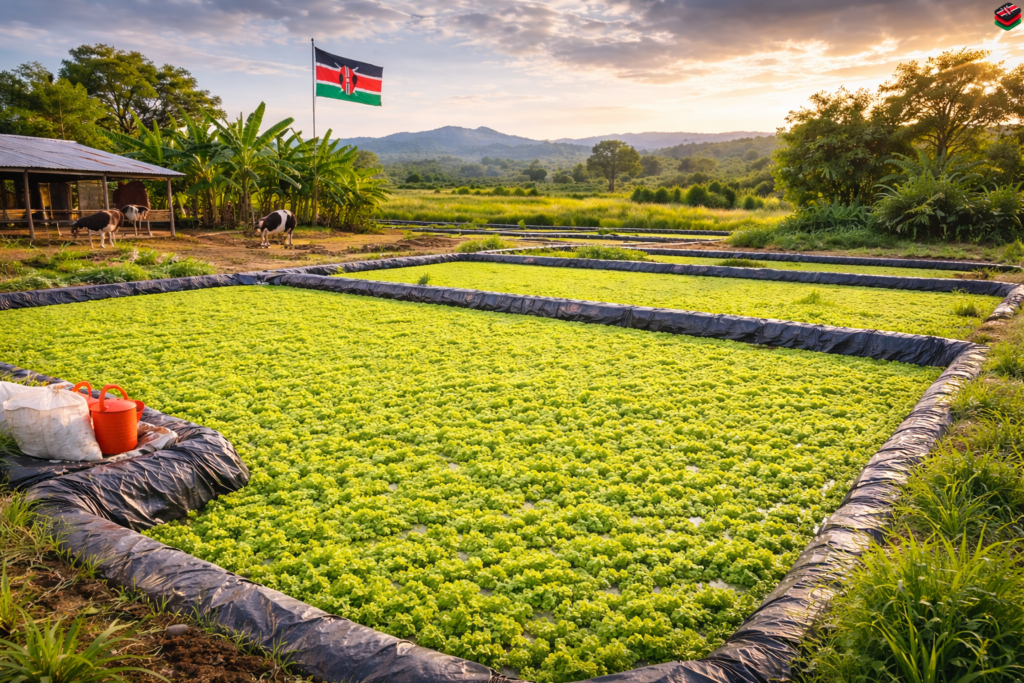
This image is AI generated.
Azolla is a small floating fern that grows naturally in water bodies such as ponds, canals, and rice paddies. It forms a symbiotic relationship with a cyanobacterium called Anabaena azollae, which allows it to fix nitrogen from the atmosphere.
Because of this natural nitrogen fixation, Azolla grows rapidly without requiring expensive fertilizers. Under favorable conditions, the plant can double its biomass every 3–5 days.
This remarkable growth rate makes Azolla a reliable source of green protein for livestock.
Read: Combating Climate Change through Tree Farming in Gatanga
Why Azolla Is a Game-Changer for Livestock Farmers
Many livestock farmers struggle with rising feed costs. Commercial feeds often account for 60–70% of production expenses in poultry and dairy farming.
Azolla helps reduce these costs while maintaining nutritional value.
Key advantages include:
-
Rapid growth and continuous harvesting
-
High protein content
-
Minimal land requirement
-
Low startup cost
-
Suitable for many livestock species
Since Azolla grows in water, farmers can produce large quantities even in small backyard ponds.
Nutritional Value of Azolla
One of the main reasons Azolla is widely used in livestock feeding is its impressive nutritional profile.
| Nutrient | Approximate Content |
|---|---|
| Crude Protein | 20–30% |
| Amino Acids | Rich in essential amino acids |
| Vitamin A | High |
| Vitamin B12 | High |
| Calcium | Moderate |
| Phosphorus | Moderate |
| Minerals | Iron, magnesium, potassium |
Because of its nutrient density, Azolla works well as a supplement to conventional livestock feed rather than a complete replacement.
Ideal Conditions for Growing Azolla
To achieve optimal growth, farmers must create the right environment.
Azolla grows best under the following conditions:
| Factor | Recommended Level |
|---|---|
| Water depth | 5–15 cm |
| Temperature | 20–30°C |
| pH | 5.5–7 |
| Sunlight | Partial shade |
| Water source | Clean, non-chlorinated water |
Too much sunlight can cause overheating, while too little sunlight slows growth. Therefore, a location with filtered or moderate sunlight works best.
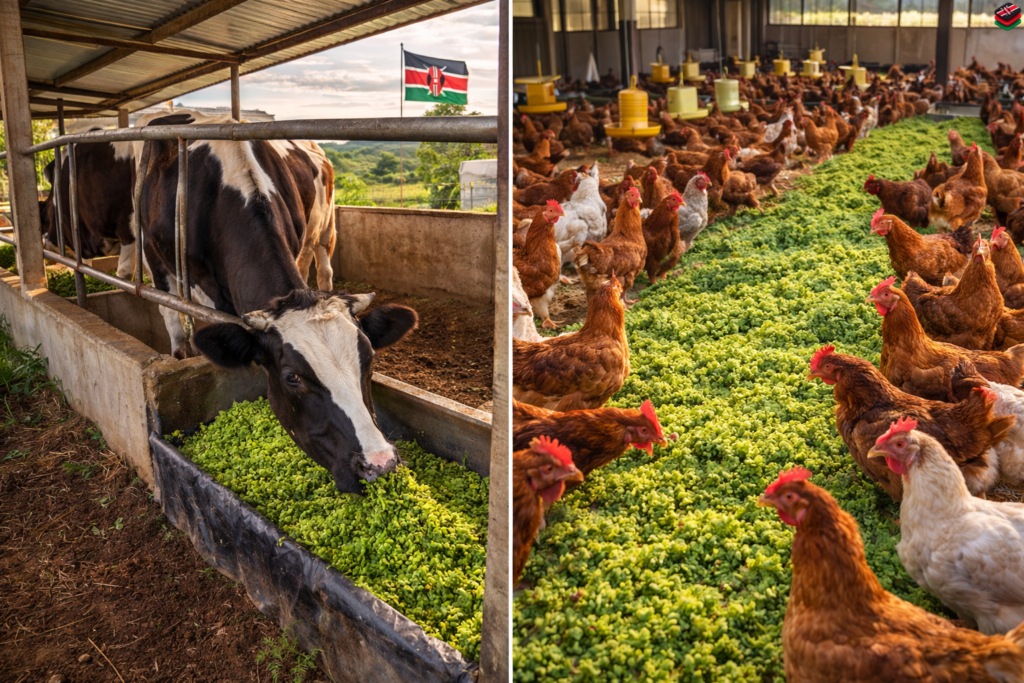
This image is AI generated.
How to Start an Azolla Farm
Starting an Azolla farm is simple and affordable. Even smallholder farmers can begin production with minimal investment.
Step 1: Select a Suitable Site
Choose a location that:
-
Receives moderate sunlight
-
Has access to clean water
-
Is protected from strong winds
-
Is away from contamination sources such as chemicals or pesticides
A shaded backyard or garden area is usually ideal.
Step 2: Construct the Azolla Pond
Farmers commonly build ponds using simple materials such as bricks, wooden frames, or soil trenches lined with plastic sheets.
Example Pond Sizes
| Pond Size | Suitable For |
|---|---|
| 2m × 2m | Household poultry or rabbits |
| 4m × 2m | Small dairy farm |
| 6m × 4m | Commercial Azolla production |
Line the pond with silpauline or heavy plastic sheets to prevent water seepage.
Step 3: Prepare the Pond
Fill the pond with water to a depth of about 10–15 cm. Then add:
-
10–15 kg sieved soil
-
2–3 kg cow dung slurry
-
A small amount of superphosphate fertilizer
These nutrients create the ideal environment for Azolla growth.
Step 4: Introduce Azolla Culture
Add fresh Azolla culture evenly across the pond surface.
Within a few days, the plant begins spreading rapidly across the water surface.
Under good conditions, the pond will become fully covered within 7–10 days.
Harvesting and Maintenance
Azolla requires regular harvesting to maintain healthy growth.
Harvesting Frequency
Farmers should harvest every 3–5 days.
Harvesting removes excess biomass and prevents overcrowding.
Harvesting Method
Use:
-
Plastic trays
-
Mesh nets
-
Hand scoops
Remove only about 30–40% of the Azolla at a time so the remaining plants continue growing.
Pond Maintenance
To maintain productivity:
-
Add cow dung slurry every 7–10 days
-
Replace some water periodically
-
Remove weeds or insects
-
Maintain proper water depth
Proper maintenance allows continuous production throughout the year.
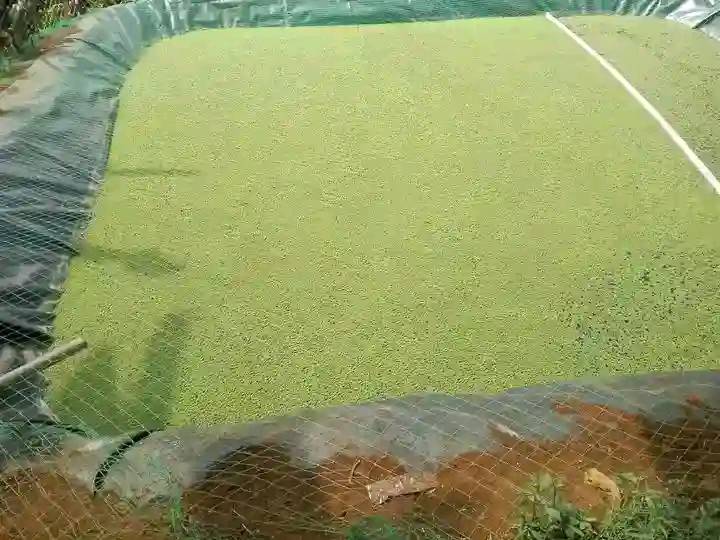
Azolla Farming Pond
Azolla Feeding Rates for Different Livestock
Azolla works best as a feed supplement rather than the main diet.
| Animal | Recommended Daily Amount |
|---|---|
| Dairy Cow | 1–1.5 kg |
| Goat | 300–500 g |
| Poultry | 20–30 g |
| Pigs | 1 kg |
| Rabbits | 100–200 g |
| Fish | Mixed with regular feed |
Before feeding, rinse Azolla in clean water to remove excess manure or impurities.
Mixing Azolla with conventional feed improves acceptance by animals.
Common Challenges in Azolla Farming
Like any farming system, Azolla production can face challenges. However, most issues are easy to correct.
| Problem | Cause | Solution |
|---|---|---|
| Yellow Azolla | Nutrient deficiency | Add cow dung slurry |
| Slow growth | Insufficient sunlight | Move pond location |
| Pest infestation | Dirty water | Replace water and clean pond |
| Overcrowding | Poor harvesting | Harvest regularly |
| Drying or overheating | Excess sunlight | Provide shade |
Early monitoring helps maintain healthy production.
Cost of Starting an Azolla Farm in Kenya
Azolla farming is affordable compared to other livestock feed systems.
| Item | Estimated Cost (KES) |
|---|---|
| Polythene sheet | 1,500 |
| Pond construction | 2,000 |
| Azolla starter culture | 500 |
| Organic manure | 300 |
| Water supply | variable |
Total startup cost typically ranges between KSh 3,000 and KSh 5,000.
This makes Azolla suitable for both smallholder farmers and commercial producers.
Profitability and Feed Cost Reduction
Livestock feed costs are one of the biggest expenses in animal farming.
For example, dairy cattle often consume feed costing KSh 50–70 per kilogram.
By supplementing feed with Azolla, farmers can replace 30–40% of conventional feed.
This can lead to potential savings of KSh 2,000 to KSh 6,000 per month, depending on herd size.
For poultry farmers, Azolla supplementation can significantly reduce reliance on expensive commercial feed.
Environmental Benefits of Azolla Farming
Besides livestock nutrition, Azolla offers environmental benefits.
The plant:
-
Fixes atmospheric nitrogen
-
Improves soil fertility
-
Reduces the need for chemical fertilizers
-
Helps in wastewater treatment
Some farmers also use Azolla as green manure in crop farming, particularly in rice cultivation.
Is Azolla Farming Worth It?
Azolla farming is one of the simplest and most affordable livestock feed systems available to farmers in Kenya today.
It requires:
-
Minimal land
-
Low startup capital
-
Simple management
At the same time, it offers consistent protein-rich feed that improves livestock productivity and reduces production costs.
For farmers seeking sustainable and cost-effective feed alternatives, Azolla farming represents a practical and profitable solution.
Final Thoughts
As Kenya’s agriculture sector continues to modernize, farmers must adopt innovative techniques that increase efficiency and reduce costs. Azolla farming offers exactly that.
By producing their own protein-rich feed, farmers can reduce dependence on commercial feeds while improving livestock health and productivity.
With proper management, even a small Azolla pond can produce enough biomass to support a household dairy cow, poultry flock, or fish pond.
For many Kenyan farmers, Azolla is not just a plant—it is a simple innovation with the power to transform livestock feeding systems.
What's your reaction?