
 By
Peter Mburu Muranga Community Projects in Kariara Ward
Community development is not measured only by the promises made during election campaigns. It is also reflected in the initiatives people establish, the opportunities they create and the communities they bring together to address shared challenges.
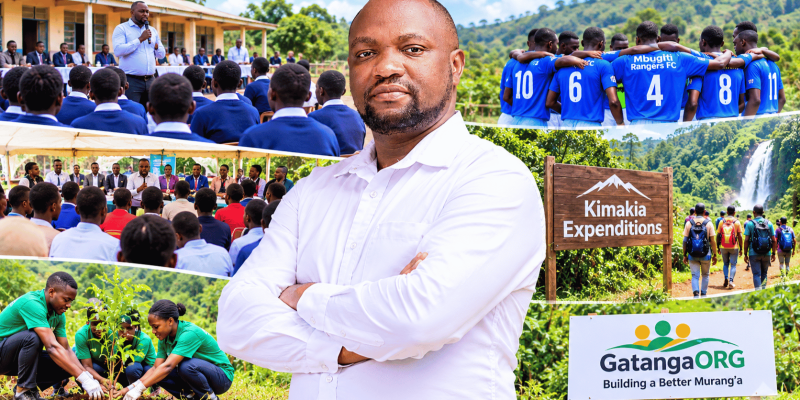
In Kariara Ward, Gatanga Sub-County, Peter Mburu Muranga has been involved in a range of community initiatives focusing on youth empowerment, education, sports, environmental conservation and community development.
These activities reflect an approach that places people, particularly young people, at the centre of local development. They also provide useful context for understanding the development priorities he has outlined as he seeks to represent Kariara Ward in the 2027 General Elections.
From organising school counselling programmes to supporting youth-led tourism and grassroots football, here is a closer look at some of the initiatives associated with Peter Mburu Muranga.
1. Promoting safer learning environments for children
A safe learning environment is essential for children’s education, personal development and wellbeing. However, communities sometimes face challenges that extend beyond the classroom.
Peter Mburu Muranga has been involved in community efforts to address concerns surrounding bars and pubs located close to learning institutions.
The initiative involved engaging with local administration to address establishments operating near schools, including those reportedly situated within 300 metres of learning institutions.
The objective was to encourage safer environments where children could concentrate on their education without unnecessary exposure to potentially harmful influences.
This engagement also helped bring wider community concerns affecting children and young people into focus.
It demonstrated the importance of cooperation between residents, local administration and other stakeholders when addressing issues that affect the wellbeing of learners.
2. Organising school counselling tours across Mbugiti Location
Following engagement with the local administration, community members identified several concerns affecting children and young people. These included child sexual abuse and exploitation, early marriages, indiscipline among learners, drug and substance abuse, and early sexual activity among school-going children.
In response, Peter, working with members of the Mbugiti Community group, organised a series of school counselling tours.
The programme brought together different stakeholders to engage learners, provide guidance and encourage responsible behaviour.
Participants included:
- Professional counsellors.
- Religious leaders.
- Government representatives.
- Local administration officials, including chiefs and assistant chiefs.
- School heads and teachers.
The counselling tours reached five schools in Mbugiti Location:
- Mbugiti Primary School.
- Kagarie Primary School.
- Karangi Primary School.
- Karega Primary School.
- Elimambo Primary School.
The programme relied on funding from members of the Mbugiti Community group, demonstrating the role that organised community contributions can play in addressing local challenges.
By bringing counsellors, educators, religious leaders and public officials together, the initiative created an opportunity for learners to receive guidance from people with different experiences and responsibilities.
More importantly, it recognised that protecting children and supporting their development requires cooperation between schools, families, communities and public institutions.
3. Connecting young people with professionals through career mentorship
Young people often have ambitions but lack access to the information, guidance and professional networks that can help them pursue those ambitions.
Peter sought to address this challenge by organising a career guidance and youth mentorship day on 22 August 2026.
The event targeted young people under the age of 30, bringing together secondary school students, college and university students, TVET trainees, graduates and job seekers.
It provided a platform for young people to interact with professionals and learn from their experiences.
The event attracted participants from different professional backgrounds, including:
- The Member of Parliament for Gatanga.
- A pilot.
- Medical doctors.
- Bank managers.
- Veterinary professionals.
- Businesspeople.
- Information technology professionals.
- Company directors.
- PhD holders and other professionals.
Rather than focusing only on academic qualifications, the speakers shared their personal journeys, career experiences and the different paths they had taken to reach their current positions.
This gave young people an opportunity to learn about professions they might not otherwise encounter in their immediate surroundings.
The mentorship initiative also highlighted the importance of connecting young people with experienced professionals who can offer practical guidance as they make decisions about education, employment and entrepreneurship.
Its broader objective was to help young people see more possibilities for their futures and understand the steps involved in pursuing them.
4. Establishing Mbugiti Rangers FC to promote grassroots football
Sports can provide young people with more than recreation. They can create opportunities for talent development, discipline, teamwork, personal growth and community participation.
Recognising this potential, Peter established Mbugiti Rangers FC, a local football team that has since been registered with the Football Kenya Federation (FKF).
The team currently competes in the Sub-County League.
Its ambition is to progress to the County League and eventually reach the National League.
The establishment of the team provides a structured environment where local players can participate in organised football and develop their abilities through competitive matches.
It also creates a foundation for identifying promising talent and encouraging young people to take sports more seriously.
Beyond the playing field, grassroots football can contribute to community identity and create opportunities in other areas of sport, including coaching, refereeing, team management and sports administration.
Mbugiti Rangers FC therefore represents an important part of the wider youth empowerment agenda associated with Peter’s community initiatives.
The team’s progression to higher leagues remains a future ambition, but its current participation in organised competition provides a starting point for that journey.
5. Creating tourism and employment opportunities through Kimakia Expenditions
One of the distinctive initiatives associated with Peter Mburu Muranga is his involvement in promoting local tourism and environmental conservation.
He brought together young people and helped establish a youth group known as Kimakia Expenditions, with the aim of helping members identify and benefit from tourism opportunities within their surrounding environment.
The group organises tours around Murang’a, with a particular focus on the Aberdare Forest. It serves both local and international visitors interested in exploring the region’s natural attractions.
However, the initiative goes beyond organising tourist visits.
Connecting tourism with environmental conservation
Kimakia Expenditions has also incorporated tree planting and forest restoration into its activities.
According to the initiative’s account, the group has adopted approximately five acres within the national park. It works with visitors to replant trees in areas affected by tree cutting.
This gives visitors an opportunity to participate directly in conservation while developing a personal connection with the forest.
It also introduces a more participatory approach to tourism, where visitors do not simply explore a destination but contribute to protecting its natural environment.
Creating opportunities for local youth
The tourism initiative also seeks to ensure that young people benefit economically from the natural resources around them.
Through the group, members receive training and gain practical experience in tourism-related activities.
The opportunities include:
- Work and income through organised tours.
- Practical exposure to tourism and hospitality.
- Experience engaging with local and international visitors.
- Opportunities to develop professional relationships and networks.
- Exposure to environmental conservation and responsible tourism.
This approach demonstrates how local tourism can create economic opportunities while supporting environmental protection.
The Aberdare Forest is an important natural asset for the region. Initiatives that connect nearby communities with responsible tourism and conservation can help build a stronger relationship between environmental protection and local livelihoods.
Through Kimakia Expenditions, the wider ambition is to help young people recognise the opportunities within their own region and develop skills that allow them to participate in the tourism economy.
6. Supporting GatangaORG and youth-led community development
Peter also supports The Gatanga Foundation, popularly known as GatangaORG, a youth-led initiative focused on improving life for citizens, residents and visitors of Murang’a County.
Through its online platform at gatanga.org, the organisation provides a platform for community-focused information, initiatives and development activities.
Its broader vision is centred on improving the quality of life in Murang’a County by encouraging participation, innovation and community-led solutions.
Peter’s support for GatangaORG adds another dimension to his involvement in local development. It reflects the importance of supporting independent youth-led organisations that seek to address community needs and create opportunities.
The distinction is important: GatangaORG is an independent youth-led initiative, and Peter is one of its supporters.
Supporting such organisations can help strengthen the wider community development environment by giving young people and community groups platforms through which they can pursue their ideas and initiatives.
7. What these initiatives mean for Kariara Ward
Although the initiatives cover different areas, they share several important objectives.
First, they recognise young people as active participants in development rather than simply beneficiaries of government programmes.
Through football, mentorship and tourism, young people gain opportunities to develop skills, build networks, participate in organised activities and explore ways of earning an income.
Second, they recognise the importance of education and child protection. The school counselling tours demonstrate an approach that brings schools, professionals, religious leaders and local administration together to address challenges affecting learners.
Third, the tourism initiative connects environmental conservation with economic opportunity. It shows how local natural resources can support livelihoods when communities participate in responsible tourism and conservation.
Finally, the support for youth-led organisations such as GatangaORG highlights the value of community participation and collaboration.
These themes also connect with several of the development priorities in Peter’s manifesto, particularly youth empowerment, inclusive development and the productive use of local resources.
Looking ahead: Building on community initiatives
Kariara Ward has opportunities in agriculture, sports, tourism, education and other areas of community development.
However, turning these opportunities into lasting progress requires people who can organise communities, build partnerships, mobilise resources and advocate for solutions.
The initiatives associated with Peter Mburu Muranga provide examples of his involvement in these areas.
As he prepares to seek the Kariara Ward MCA seat in the 2027 General Elections, these experiences offer useful context for examining his development priorities and the kind of representation he hopes to provide.
His broader message centres on the importance of creating opportunities, supporting community initiatives and ensuring that local people can participate in the development of their own communities.
Ultimately, sustainable development is not only about what is built. It is also about the people whose lives improve, the opportunities created for the next generation and the communities empowered to shape their own future.
What's your reaction?